
Credit Expert, Ari Page Warns: Trump’s Proposed Interest Rate Cap Could Backfire on American Consumers
Ari Page explains the risk-based math behind credit card lending, and why a 10% rate cap could end up hurting the consumers and small businesses it's meant to protect.

Originally Published By: Jordan French
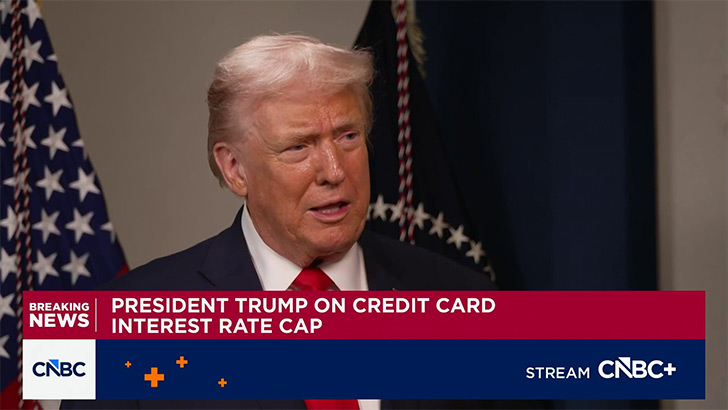
A new proposal by the Trump administration to cap credit card interest rates at 10% is gaining attention in Washington. Supporters say it would give relief to Americans dealing with rising costs and growing debt. On paper, the idea seems simple: lower rates should mean lower monthly payments.
But according to Ari Page, a business credit expert and the founder of Fund&Grow, the reality may be far more complicated.
In his recent analysis, Ari Page warns that this type of policy could actually harm the very people it is meant to help. He explains that while a rate cap may offer short-term relief, it could quickly lead to long-term consequences that restrict access to credit and weaken the economy.
Understanding How Credit Cards Really Work
To understand the issue, Page says we first need to look at how credit card companies operate.
“A credit card company makes money by giving you access to capital, and charging you interest while that debt remains outstanding.”
This system is built around risk. Lenders use credit scores to decide how likely a borrower is to repay their debt. The higher the score, the lower the risk, and usually the lower the interest rate. The opposite is also true.
“That’s because your credit score is a proxy for risk to the lender.”
Page explains that lenders must balance risk carefully. If too many borrowers fail to repay their loans, the company loses both the interest it expected to earn and the original money it lent out.
“This is necessary because a single default can wipe out all of the profit generated from dozens of accounts that pay on time.”
In other words, the current system spreads risk across many borrowers. Higher interest rates for riskier borrowers help cover the losses when some accounts fail.
The Math Behind the Industry
Page argues that the biggest issue with a 10% cap is simple: the numbers do not add up.
“The math simply doesn’t work,” he explains
Page breaks down the real costs lenders face. First, banks must pay to borrow the money they lend out. This cost is tied to the Federal Reserve’s prime rate, which he notes is currently 6.75%.
Then there are operating expenses. Running a credit card program involves staffing, fraud prevention, and customer service. These costs add another 4% to 5%.
Finally, lenders must account for borrowers who do not repay their debt. This is called the charge-off rate. For subprime borrowers, Page cites that the NY Fed reports a rate of 9.3%.
When these costs are combined, the total cost to lend money reaches over 20%.
“If the government forces banks to cap interest rates at 10%, a lender would take a guaranteed 10% loss on every dollar lent to a subprime borrower.”
Even for borrowers with strong credit, the numbers still do not work.
“Under a 10% cap, lending to a prime borrower is still a guaranteed loss.”
This creates a major problem. If lenders cannot make a profit, they cannot continue offering credit in the same way.
See Original Article Here: https://gritdaily.com/credit-expert-ari-page-warns-nterest-rate-cap-backfire/
Ready to Access the Capital You Need?
Join our free training and learn the step-by-step process thousands of entrepreneurs have used to access up to $300,000 in 0% interest business credit.